Examples of trauma-informed evaluation practice: a visual
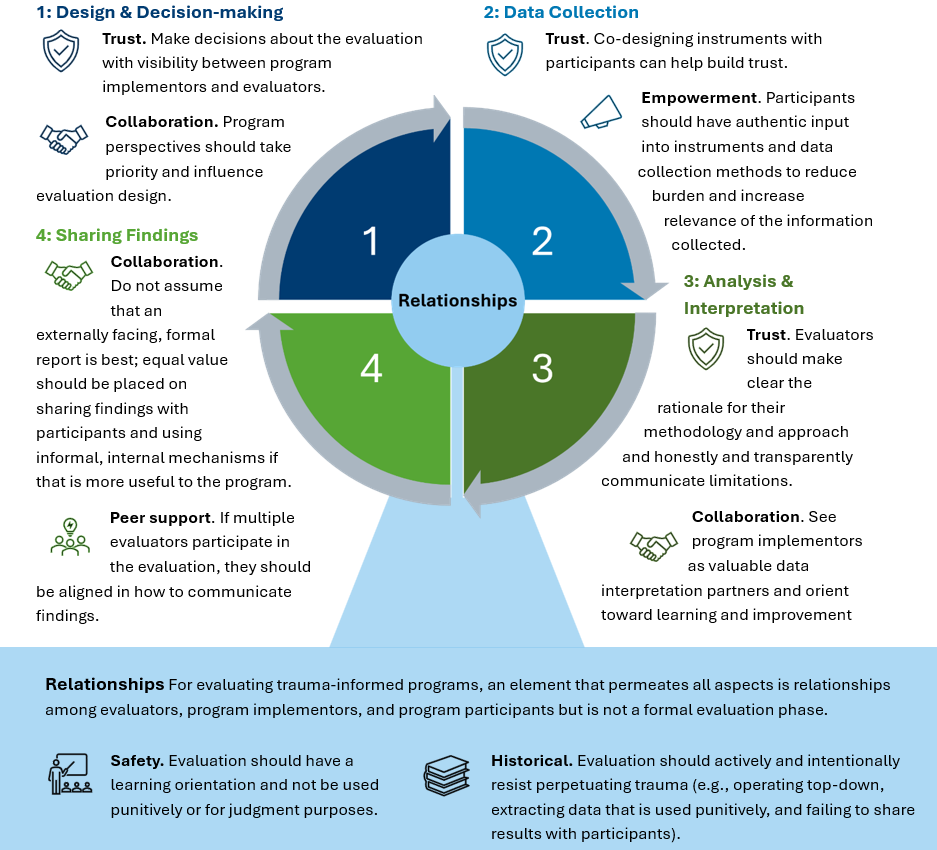
There is growing recognition of how trauma affects health and wellbeing. To support the populations they serve, some public health and healthcare organizations are introducing trauma-informed approaches. In the visual summary below and associated book chapter, Healing practices: Evaluating trauma-informed health services, CCHE illustrates how to apply SAMHSA’s six trauma-informed principles to evaluating trauma-informed programs.
This helps the evaluation avoid inflicting additional trauma on evaluation participants and is more effective in supporting the overall effort of healthcare organizations to be more trauma-informed. While all trauma-informed principles likely need attention at each evaluation phase (we consolidated some phases for simplicity), CCHE presents the most salient ones based on our experience.

Key resources:
- SAMHSA's Concept of Trauma and Guidance for a Trauma-Informed Approach https://www.nctsn.org/sites/default/files/resources/resource-guide/samhsa_trauma.pdf
- CDC’s Framework for program evaluation in public health https://www.cdc.gov/mmwr/pdf/rr/rr4811.pdf
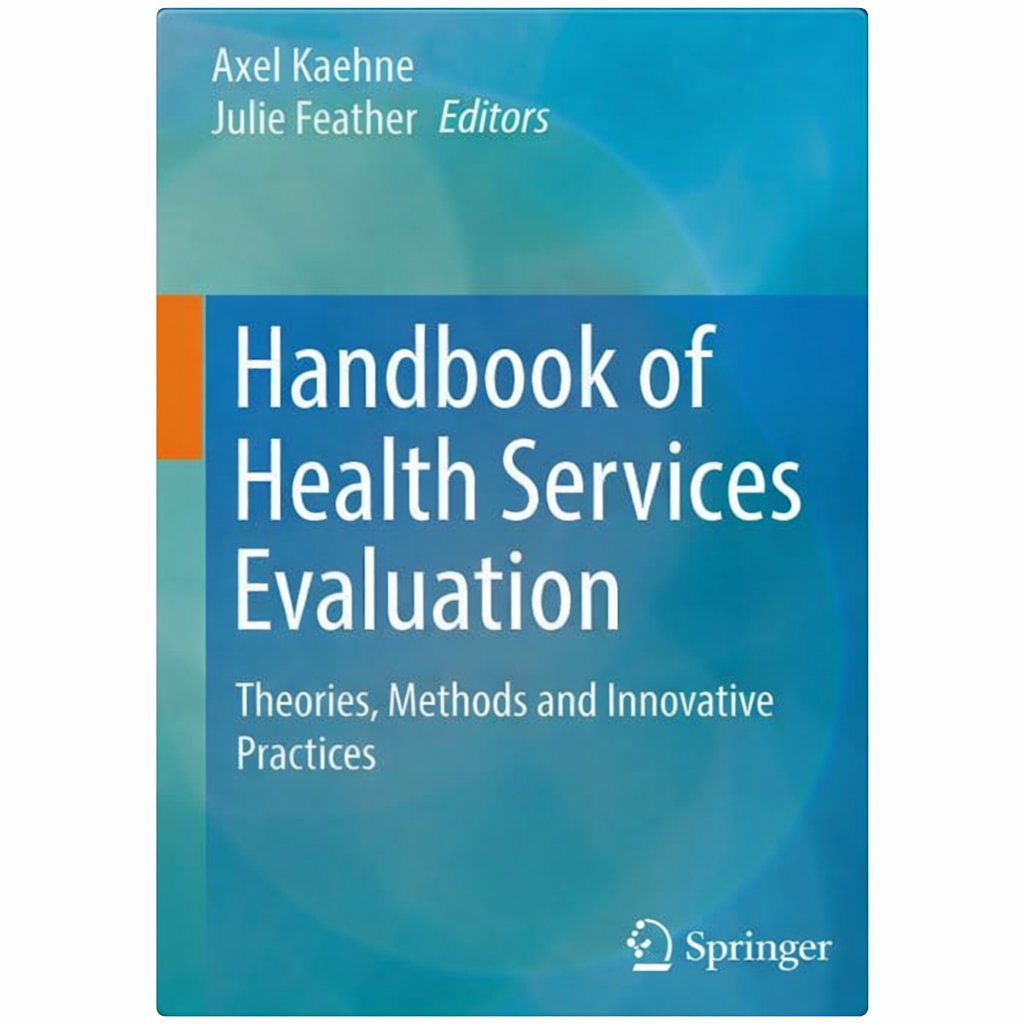
Examples of what this can look like in evaluation practice are available in the chapter, Healing practices: Evaluating trauma-informed health services in the Handbook of Health Services Evaluation (2025), A Kaehne and J Feather (eds.), Springer Nature.
https://link.springer.com/chapter/10.1007/978-3-031-87869-5_20