Recent News and Events

May 14, 2026
In partnership with Kaiser Permanente Community and Social Health, CCHE completed Kaiser Permanente’s 2025 Community Health Needs Assessment (CHNA). Insights from these reports can help Kaiser Permanente understand health needs in its communities and design effective community health strategies.
April 6, 2026
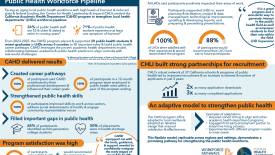
As we celebrate National Public Health Week, it’s impossible to ignore one of the most pressing challenges facing our field: a rapidly changing workforce landscape. With many public health workers retiring and local health departments (LHDs) navigating shrinking budgets, California is anticipating a public health workforce gap. Strengthening and sustaining the next generation of public health professionals is more critical than ever.

March 19, 2026
Organizations are being asked to adapt faster than ever—yet many still rely on evaluation models built for stability, not change. Last fall, CCHE’s Maggie Jones and Elena Kuo participated in a panel presentation at American Evaluation Association’s annual conference with Maryam Khojasteh and Jess Renger, colleagues from Robert Wood Johnson Foundation and Kaiser Permanente’s National Office of Community & Social Health, on how CCHE’s role as a “stand-by” evaluator has enhanced organizational learning and adaptability within their organizations.
February 27, 2026
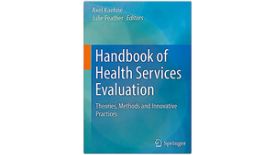
A book chapter authored by CCHE’s Monika Sanchez and Lisa Schafer highlights the importance of integrating trauma-informed approaches into evaluation of health services to avoid re-traumatization and support healing among evaluation participants.

January 14, 2026
CCHE recently wrapped up evaluation of a demonstration project with Attane Health and a Medicaid health plan, funded by Health Forward to test a simple idea: could home-delivered groceries ordered online plus virtual nutrition coaching make life a little easier for people with high risk pregnancies? Over about two years, 211 members enrolled in this program, most folks placed at least one order, and they often continued to use the benefit after birth.

December 11, 2025
While this year has been challenging in many ways, our team is grateful for another year filled with meaningful work and partnerships. As 2025 comes to a close, we reflect on innovative projects that highlight our work across CCHE’s five focus areas. We look forward to continuing our efforts in the new year, using data and insights to strengthen programs and initiatives that aim to improve health and support the well-being of communities across the United States. Please read on for highlights of projects that wrapped up in 2025.

November 20, 2025
People with low incomes and from racial/ethnic minority groups regularly face barriers to accessing primary care and behavioral health care. These obstacles include limited provider networks, challenges finding language-concordant providers, and challenges accessing the technology needed to take advantage of telehealth.